What does dreaming about Dark Corridor mean?
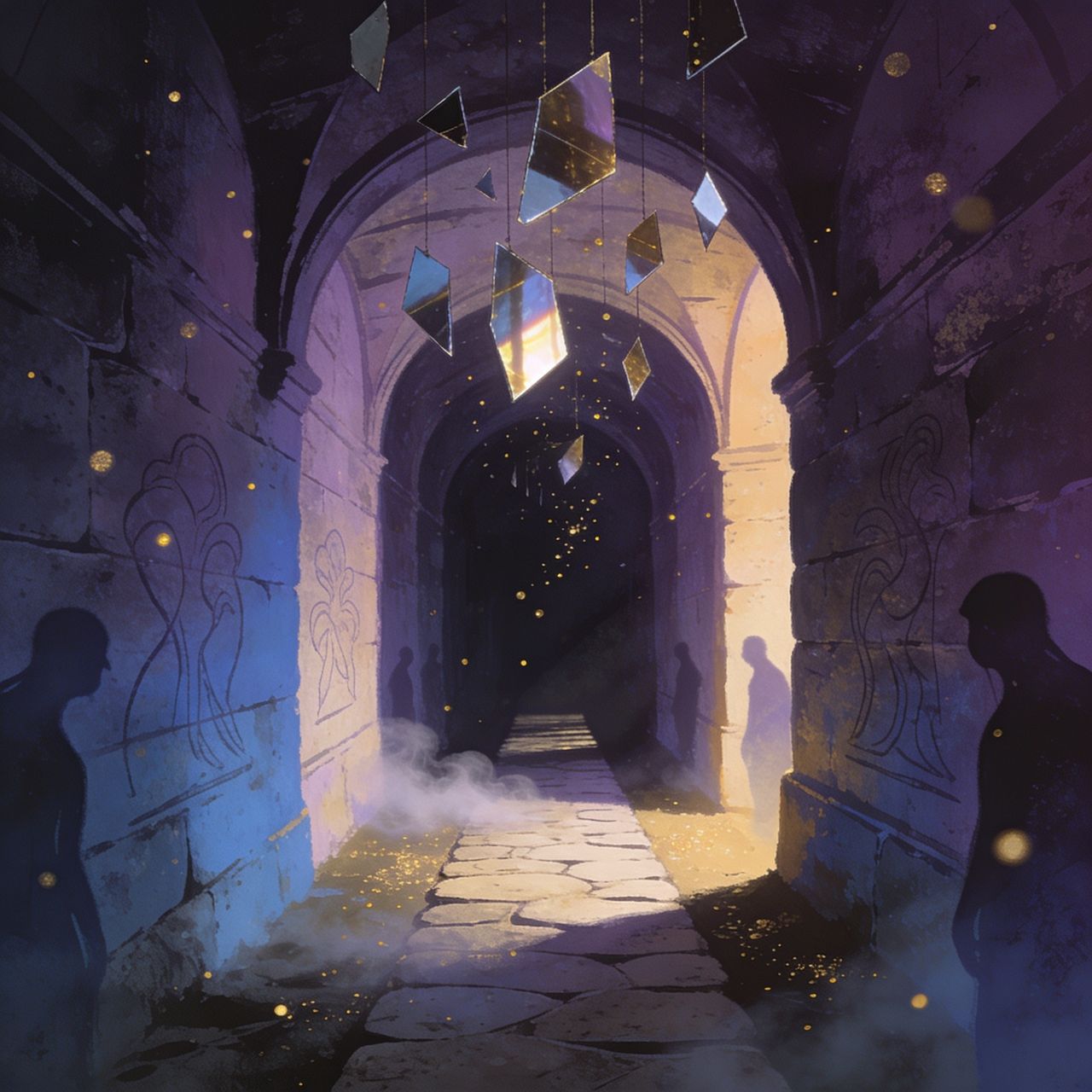
A dark corridor represents passage through unknown or frightening territory, transitions marked by fear or uncertainty, or moving through shadows of the unconscious. It might symbolize confronting wha...
Common scenarios
This scenario suggests an active engagement with uncertainty or fear. It may represent your willingness to move forward despite feeling lost or anxious, reflecting a journey of personal transformation.
Feeling trapped in a dark corridor often indicates a psychological block or unresolved conflict. This scenario could emerge when you are avoiding a difficult decision or resisting necessary change.
Common questions
Across cultures
In Western psychological traditions, particularly Jungian analysis, a dark corridor is often interpreted as a symbol of the unconscious or the shadow self. It represents a passage through hidden fears, unresolved traumas, or aspects of the psyche that require integration. The dreamer is encouraged to traverse this space with awareness, as it can lead to personal transformation and wholeness.
In Eastern and folkloric traditions, dark corridors may be seen as liminal spaces—thresholds between worlds or states of being. In some cultures, these dreams might be viewed as warnings or omens, urging caution or spiritual reflection. They could also signify a journey through the afterlife or a test of moral character, depending on the narrative context.
In modern cultural interpretations, such as in media and storytelling, dark corridors frequently represent suspense, danger, or the unknown. This perspective can influence dreamers to associate the symbol with stress or thriller-like anxiety. However, some contemporary dreamwork approaches reframe it as a call to adventure, emphasizing personal courage and the potential for growth in facing the unknown.
Often appears alongside

Did you dream about Dark Corridor?
Get your free AI interpretation in 30 seconds — no account needed.
Dreams featuring Dark Corridor
These interpretations are psychological hypotheses for self-reflection, not predictions or medical advice. Dreams are highly personal — use these insights as a starting point for understanding your own emotional patterns and inner experiences.